EV manufacturer
Mazda EV diagnostics
Explore Mazda diagnostic codes for CX-70, CX-90 and other verified model families. Review source-backed evidence and supported model applicability.
3 model families with verified coverage46 verified
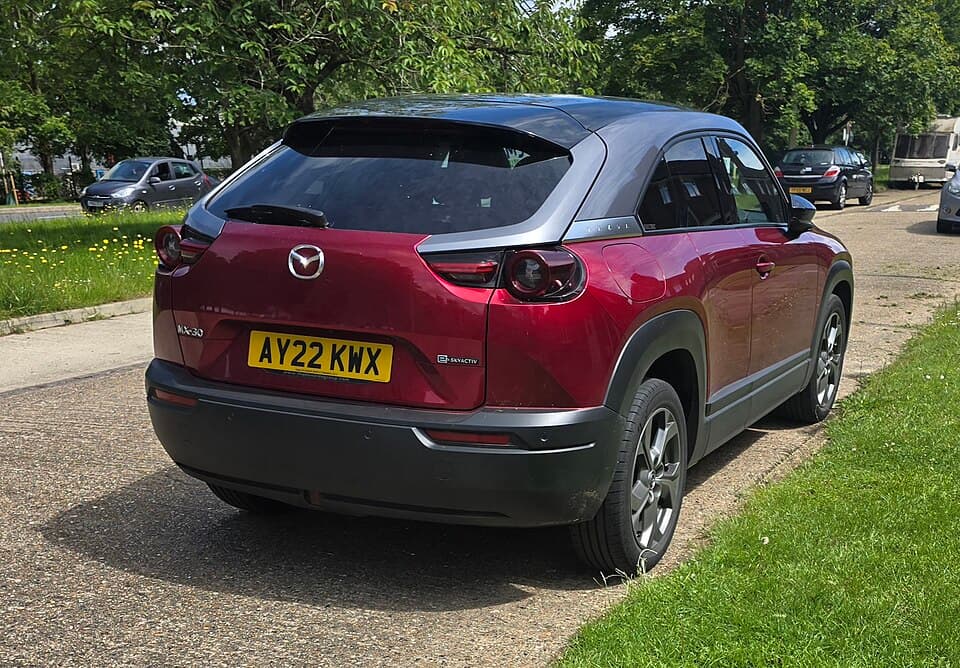 Mazda MX-30
Models with verified diagnostic coverage
Verified Manufacturer-level verified records
These records passed the verified evidence gate. Model applicability is shown only where separately supported.
Telematics MalfunctionVerified diagnostic recordIn Vehicle Network MalfunctionVerified diagnostic recordU300A:62Verified diagnostic recordC0061:54Verified diagnostic recordU3004:17Verified diagnostic recordB108E:04Verified diagnostic recordB119F:01Verified diagnostic recordU0420:00Verified diagnostic recordB1182:06Verified diagnostic recordC1001:92Verified diagnostic recordB1041:54Verified diagnostic recordB13D3:94Verified diagnostic recordU0415:00Verified diagnostic recordP1260:00Verified diagnostic recordC1001:97Verified diagnostic recordU3000:04Verified diagnostic recordSystem FaultFor a 2024 Mazda CX-90 PHEV in the US, “System Fault” is documented in the refueling procedure as a message that may appear while preparing to refuel. Mazda’s referenced communication directs the owner to the owner’s manual for next steps.Ultrasonic Sensor MalfunctionFor certain 2022 Mazda MX-30 vehicles, an “Ultrasonic Sensor Malfunction” warning can appear after front and/or rear ultrasonic sensor replacement during body or paint repair. Mazda bulletin 09-026-23 addresses affected vehicles built before July 21, 2021.P2610Verified diagnostic recordU2050Mazda DTC U2050:55 identifies the Telematics Communication Unit (TCU) as having “Activation of remote control not implemented.” The verified Mazda guidance directs technicians to TSB 09-013/20 when this code is stored after TCU replacement or reprogramming.P143BFor verified Mazda PHEV applications, P143B:00 is documented when the Backup Power Supply Battery (BPS) detects low voltage from the Sub Battery. Mazda’s documented resolution is Sub Battery replacement using the Workshop Manual procedure.U0420Verified diagnostic recordU300AFor certain 2022–2024 US Mazda CX-90 and MX-30 vehicles, verified Mazda communications list U300A:62 as an Electric Parking Brake (EPB) DTC that can appear with multiple other faults when communication is affected by a poor DLC-2 connection. An aftermarket device connected to DLC-2 may spread the female terminals.B1041Verified diagnostic recordC1001Mazda DTC C1001:97 is identified in the verified evidence as a Forward Sensing Camera (FSC) code. For the listed vehicle applications, Mazda service communications also identify C1001:97 among DTCs that may be associated with an aftermarket device connected to the DLC-2 diagnostic connector.C0061Verified diagnostic recordU0415Verified diagnostic recordC0023For Mazda C0023:14, verified evidence identifies a brake light circuit malfunction and states that an aftermarket brake light flasher may cause the code.B108EMazda DTC B108E:04 is identified in the verified bulletins as “Center Display Internal Malfunction.” Mazda service communications list it among codes that may occur when an aftermarket device connected at DLC-2 causes the female terminals to spread open.U3004For certain U.S. 2022–2024 Mazda CX-90 and MX-30 vehicles, Mazda service communications list DTC U3004:17 as “ACC relay circuit malfunction.” The communications identify an aftermarket device connected to DLC-2 as a possible contributor because it may spread the DLC-2 female terminals open.B119FMazda DTC B119F:01 is identified in verified Mazda/NHTSA service communications as “TEL antenna No.1 malfunction.” Mazda documents that aftermarket equipment—such as a dash cam, radar detector, or FasTrak device—may create electrical noise that disturbs GPS-signal reception.U3000For Mazda U3000:49, verified Mazda service information identifies an infotainment-system condition. For a 2022 MX-30, Mazda directs updating the Connectivity Master Unit (CMU) to CMU_7000C0A-NA02_11036 or later when this DTC is stored. The supplied evidence does not establish driving or charging safety.U2500Verified evidence identifies U2500:82 in a specific post-reprogramming context: it may be stored with the amber i-ACTIVSENSE warning light on after an ECU is programmed. Mazda directs technicians to SA-043/20 for that condition.U2120Verified diagnostic recordB1B38Verified diagnostic recordB1B36Verified diagnostic recordB11C4Verified diagnostic recordP1260Mazda DTC P1260:00 is identified in verified Mazda/NHTSA communications as an immobilizer system problem. It has been reported with intermittent no-start or inability to turn the engine off, security/start-indicator warnings, battery discharge, relay buzzing, and a blurry rear-view monitor display.B13D3Verified diagnostic recordP0DAAP0DAA is listed in verified Mazda campaign repair material as an example DTC that may be stored if a warning light appears during the documented procedure. The supplied evidence does not establish a component fault definition for P0DAA.U2142Verified Mazda service-bulletin evidence identifies U2142:00 as “Communication error with microphone.” The supplied evidence states that, if stored, this DTC is cleared after the vehicle is powered off, all doors are locked, and the vehicle remains undisturbed for 5 minutes or longer to enter sleep mode.P0DABVerified diagnostic recordU0401Mazda DTC U0401:68 is documented as an error signal received from the ECM/PCM, electronically controlled brake unit/DSC HU/CM, and instrument-related system text as supplied. Verified applicability is 2024–2026 Mazda CX-70 and CX-90 vehicles in the US.P0AA6For specified U.S. 2024–2025 Mazda CX-70 and CX-90 vehicles, DTC P0AA6:00 means “High voltage insulation malfunction: Decrease in vehicle insulation resistance.” Official Mazda/NHTSA communications state that legitimate electrical leakage faults can still be detected and store this code after 7325C Recall repair.P0C17Verified diagnostic recordB14F0For the listed Mazda vehicles, B14F0:92 may be stored as a past record when the Forward Sensing Camera (FSC) has low visibility. Verified evidence states this does not mean there is an actual FSC defect.