EV manufacturer
Kia EV diagnostics
Explore Kia diagnostic codes for EV6, Niro and other verified model families. Review source-backed evidence and supported model applicability.
4 model families with verified coverage31 verified
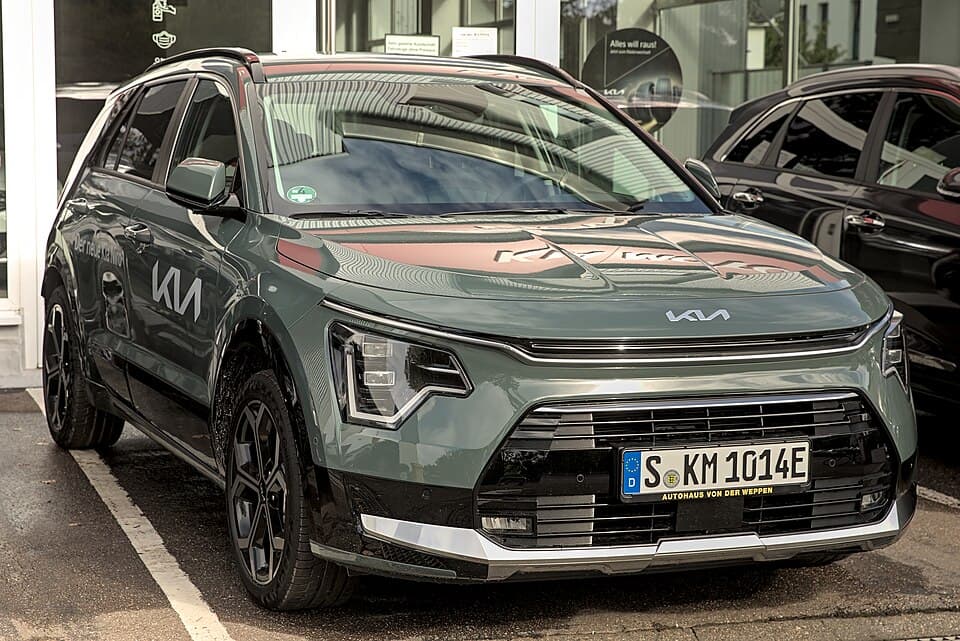 Kia Niro PHEV
Models with verified diagnostic coverage
Verified Manufacturer-level verified records
These records passed the verified evidence gate. Model applicability is shown only where separately supported.
C1335For applicable 2015–2017 Kia Optima and Soul vehicles in the U.S., DTC C1335 is identified in Kia communication PS474 as the Right Rear Sensor. Earlier descriptions may show it as Sensor 4.P060500For certain 2017–2018 Kia Niro PHEV and HEV vehicles, DTC P060500 is identified as an ECU ROM error. Kia bulletin PS556 describes possible MIL illumination with this stored code and a potentially insufficient GC101 ground-to-body contact.B176200Verified diagnostic recordB168400For certain 2017–2018 Kia Soul vehicles in the US, DTC B168400 is identified in Kia/NHTSA service communication PS610 as “Not Configured Device is Detected.” It may occur where an older-production driver seat-belt buckle with a 4-pin connector is not compatible with a superseded SRS Control Module (SRSCM).C1261For verified Kia applicability, C1261 is identified as a Zero-Setting Error. Kia TSB CHA084 directs technicians to erase the DTC first, inspect wiring and connector condition if it returns, and replace the column and housing assembly if the DTC returns after those checks.C1688For Kia vehicles covered by TSB CHA084, DTC C1688 is identified as “VSM Signal Error.” If the DTC returns and MDPS is inoperable, the bulletin directs replacement of the MDPS ECU. If the DTC returns while MDPS operation is normal, the bulletin directs continued investigation of wiring issues.C1112For Kia C1112, the verified TSB identifies a Torque Sensor Voltage Error. It directs checking the wiring and connector condition between the torque sensor and ECU; if the DTC returns, replace the MDPS ECU.C1704Kia DTC C1704 is identified in verified Kia TSB evidence as an MDPS ECU fail-safe relay fault. The documented procedure is to erase the DTC, then check the wiring and connector at the ECU. If the DTC returns, the TSB directs replacement of the MDPS motor.C1259Verified diagnostic recordC1290For Kia C1290, the verified TSB identifies a torque sensor error. The documented process is to erase the DTC, check wiring and connector condition, and replace the column and housing assembly if the DTC returns.C1260For Kia vehicles covered by the supplied evidence, DTC C1260 is a Steering Angle Sensor Signal Error. The documented procedure is to reset steering-angle-sensor calibration; if the DTC returns, inspect wiring and connector condition.C1687Kia DTC C1687 is identified in TSB CHA084 as “CAN Time Out VSM.” The verified Kia procedure says: if the DTC returns and MDPS is inoperable, replace the MDPS ECU; if the DTC returns and MDPS operation is normal, continue investigating wiring issues.P1326Verified diagnostic recordC166A87For applicable 2020–2021 Kia Soul (SK3) vehicles, DTC C166A87 is documented after BCW module replacement when BCW (BSD) variant coding has not been performed with Kia KDS under S/W Management for the vehicle’s installed options.P160300For the verified application, Kia’s service information links P160300 to the IVT/TCM learning and service-action process. If the MIL remains on with P160300 after the specified adaptive-value reset/TCM learn procedure, the bulletin directs replacement of the IVT.P1B96P1B96 is identified in Kia high-voltage-battery (HVB) service documentation as an HVB DTC. The supplied evidence does not establish a fault definition, symptoms, drivability, charging status, or a specific repair.P1B74For a US-market 2018–2022 Kia Niro, P1B74 is identified in Kia’s high-voltage-battery (HVB) DTC documentation. The supplied evidence does not establish a technical fault definition for this code.P1B70For a 2018–2022 Kia Niro in the US, P1B70 is identified in Kia TSB ELE044 as an HVB DTC. The supplied evidence does not establish the fault definition, drivability, charging status, or a specific repair.B162100Verified diagnostic recordP132700Verified diagnostic recordCheck Hybrid System. Stop SafelyVerified diagnostic recordB2600For a 2017–2018 Kia Soul in the US, B2600 appears in verified NHTSA manufacturer communication PS610_R1 as an SRSCM part number (95910 B2600), not as a confirmed diagnostic trouble code definition.B0100For U.S.-market 2017–2018 Kia Soul vehicles, verified evidence identifies B0100 as an SRSCM (airbag/SRS control module) part number in Kia Pitstop PS610_R1—not as a diagnostic trouble code meaning. The bulletin says to add the applicable “XX” color code per VIN to the required/applicable part number.P1327Verified diagnostic recordP1B77For certain U.S.-market 2017–2019 Kia Optima vehicles, DTC P1B77 is identified in Kia TSB ELE192/ELE192_R1 as a High Voltage Battery Pre-Charging fault. The bulletin addresses BMS diagnosis logic, OPU judgment logic for P1B77, and MCU communication logic.P0441For some 2015–2016 Kia Soul (PS) vehicles in the US, P0441 means “Evaporative Emissions System Incorrect Purge Flow.” Kia service bulletin ENG164/ENG164R1/ENG164_R2 addresses vehicles that may have the malfunction indicator light (MIL) on with this code and specifies an ECU software upgrade/reprogramming procedure.P0087For a 2015–2016 Kia Soul in the US, DTC P0087 means “Fuel Rail/System Pressure Too Low.” A Kia/NHTSA manufacturer communication says it may be stored as a history code and may be associated with a restricted low-pressure fuel line.P0455For applicable 2015–2016 Kia Soul vehicles in the US, Kia communication PS469 addresses P0455 when the MIL is illuminated and the EVAP leak self-test result is NTF. It calls for a manual EVAP test for hard-to-find or small leaks.P0456For a 2015–2016 Kia Soul in the US, DTC P0456 is identified in Kia bulletin PS469 as an evaporative-emissions-system leak detected code. When the EVAP leak self-test returns NTF, the bulletin recommends a manual EVAP test for hard-to-find/small leaks.P0442For applicable 2015–2016 Kia Soul vehicles in the US, Kia communication PS469 addresses an illuminated MIL with P0442 when the EVAP leak self-test result is NTF, using a manual EVAP emissions test for hard-to-find or small leaks.P0457For applicable 2015–2016 Kia Soul vehicles in the US, P0457 is associated with an evaporative-emissions-system leak detected condition. When the EVAP leak self-test returns NTF, Kia’s PS469 communication recommends a manual EVAP test.