EV manufacturer
Chevrolet EV diagnostics
Explore Chevrolet diagnostic codes for Blazer, Bolt EUV and other verified model families. Review source-backed evidence and supported model applicability.
4 model families with verified coverage270 verified
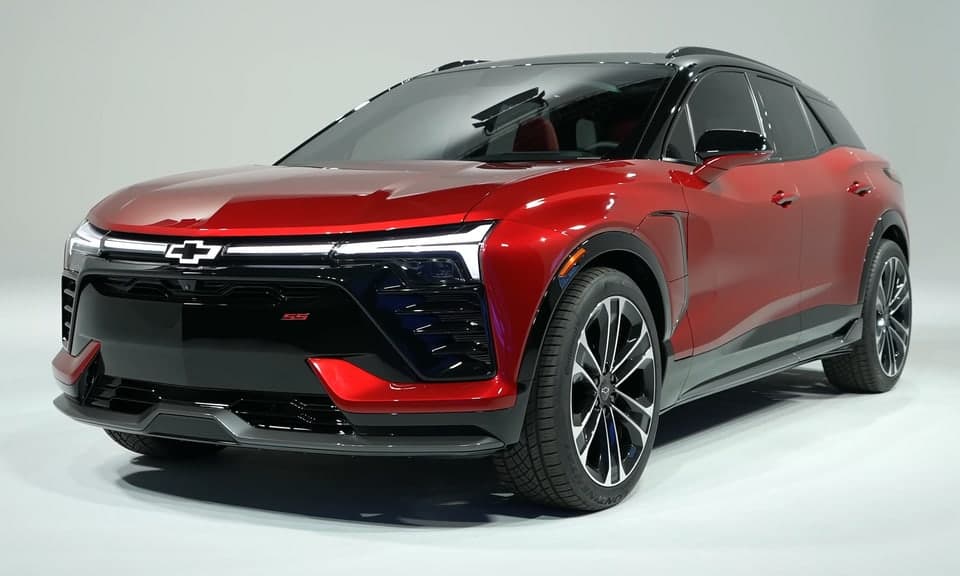 Chevrolet Blazer EV
Models with verified diagnostic coverage
Verified Manufacturer-level verified records
These records passed the verified evidence gate. Model applicability is shown only where separately supported.
B1596For certain 2023–2026 Chevrolet EVs in the U.S., official GM communications identify B1596.86 as a radio-related DTC that can set because of a software anomaly. The bulletin instructs technicians to ignore this DTC in the specified context and not replace the radio solely for it.U164EU164E is listed in Chevrolet radio-related manufacturer communications. Verified evidence says it can set because of a software anomaly; the applicable bulletin directs technicians not to replace the radio for this DTC and to follow the relevant software-update process where applicable.U164BFor applicable Chevrolet vehicles, U164B is listed in GM/NHTSA manufacturer communications as a radio-related DTC that may set because of a software anomaly. The bulletin direction is to ignore this DTC in the specified context and not replace the radio solely for U164B.B1A1FVerified diagnostic recordU0142For covered Chevrolet vehicles, U0142 is listed in GM/NHTSA PIT6393 as a radio-related DTC that may set because of a software anomaly. The bulletin says to ignore this DTC in that bulletin context and not replace the radio for it.U11FDFor Chevrolet Blazer, Bolt EUV, Bolt EV, and Equinox vehicles in the supplied 2023–2026 US applicability data, DTC U11FD is listed in GM/NHTSA manufacturer communication PIT6457B. The supplied evidence does not define the fault meaning, symptoms, driving safety, charging safety, or a repair procedure.U1615Verified diagnostic recordU0265For covered U.S. Chevrolet Blazer, Bolt EV, Bolt EUV, and Equinox model years, verified GM communications identify U0265 as a radio-related DTC that may set because of a software anomaly. The bulletin direction is to ignore this DTC in the stated context and not replace the radio solely for it.U164FU164F is listed in Chevrolet bulletin PIT6457B as an additional keyword/DTC. The supplied verified evidence does not establish its fault definition, affected system, symptoms, driving or charging safety, diagnostic procedure, or repair.U1616Verified diagnostic recordB1A1BVerified diagnostic recordU118BChevrolet U118B: Correction To correct this concern, you must reset the GaU1862Verified diagnostic recordU186BU186B is listed in Chevrolet manufacturer communications as one of several communication DTCs that may be set with an SES/MIL/CEL warning. The supplied evidence does not establish a code-specific definition beyond this context.U0100Verified evidence links U0100 to Chevrolet bulletin 13-08-116-001J/K as one of several possible communication DTCs observed with certain electrical concerns. The supplied evidence does not establish a complete U0100 definition, a vehicle-specific diagnosis, or whether the vehicle is safe to drive or charge.U0101Verified diagnostic recordU2109Verified diagnostic recordB1325Verified diagnostic recordU2100Verified diagnostic recordC0000Verified diagnostic recordU2107Verified diagnostic recordP1F0EVerified diagnostic recordP1FFFVerified diagnostic recordP1FFCChevrolet P1FFC: When checking and adjusting the high-voltage (HV) battery surge tank (1) coolant level, disregard tP1FFDChevrolet P1FFD: When checking and adjusting the high-voltage (HV) battery surge tank (1) coolant level, disregard the factP1FFEChevrolet P1FFE: When checking and adjusting the high-voltage (HV) battery surge tank (1) coolant level, disregard the factory levelP0AA6Verified diagnostic recordP1AE6Verified diagnostic recordP1FFBChevrolet P1FFB: When checking and adjusting the high-voltage (HV) battery surge tank (1) coolant level, disrP069EVerified diagnostic recordU0284Verified diagnostic recordP059FVerified diagnostic recordB1000 SYM00Verified diagnostic recordC056DVerified diagnostic recordC056EVerified diagnostic recordC0475Verified diagnostic recordC0544Verified diagnostic recordC047AVerified diagnostic recordP0DAAVerified diagnostic recordP1EE6Verified diagnostic recordP0D3EVerified diagnostic recordP0D3FVerified diagnostic recordP0AFAVerified diagnostic recordP0303Verified diagnostic recordP0300For the verified applicability, P0300 is referenced in a Chevrolet service bulletin for the 2024 Chevrolet Blazer in the United States. The supplied evidence does not establish a diagnostic definition, symptoms, driving or charging safety, or a repair procedure for this code.B0268Verified diagnostic recordP0442Verified diagnostic recordU151BVerified diagnostic recordB0408Verified diagnostic recordB0248Chevrolet B0248: Fuel Gauge Does Not Read Full, Only Goes to 7/8 Full On listed models only, install new design fuel level sensor kit & fuel fill shutoff valve. Install componenP0324Chevrolet P0324: it-yourselfer". They are written to inform these technicians of conditions that may occur on some vehicles, or to provide information that could assist in the proP06A3For a 2016 Chevrolet Spark in the US, verified evidence identifies P06A3 in GM bulletin 16-NA-180 as a condition addressed by Engine Control Module (ECM) reprogramming with SPS. The bulletin specifically says not to replace the ECM to correct this condition.B257CVerified diagnostic recordB257DVerified diagnostic recordP16F3Verified diagnostic recordP0D59Verified diagnostic recordP0D58Verified diagnostic recordP0D22Verified diagnostic recordP0D26Verified diagnostic recordB101D-37B101D-37 may be found as a history code in the OnStar VCIM. GM states it does not cause OnStar operating issues and should be disregarded; diagnose the customer’s actual symptoms and any additional codes.B101D-F0Verified diagnostic recordB101D-3CVerified diagnostic recordP0606For a 2016 Chevrolet Spark in the US, NHTSA manufacturer communication 16-NA-180 identifies P0606 as a condition addressed by Engine Control Module (ECM) reprogramming with SPS. The bulletin specifically states not to replace the ECM to correct this condition.P0697For a 2016 Chevrolet Spark in the US, NHTSA manufacturer communication 16-NA-180 identifies P0697 among DTCs addressed by an Engine Control Module (ECM) calibration update. The bulletin says not to replace the ECM for this condition; it directs ECM reprogramming with SPS using Service Information (SI).P0641For a 2016 Chevrolet Spark in the U.S., official GM bulletin 16-NA-180 identifies P0641 among DTCs addressed by an Engine Control Module (ECM) software/calibration update. The bulletin says not to replace the ECM for this condition; follow ECM reprogramming instructions in GM Service Information (SI).P0651For a 2016 Chevrolet Spark in the US, P0651 is covered by Chevrolet bulletin 16-NA-180. The verified correction is Engine Control Module (ECM) reprogramming with SPS; the bulletin specifically says not to replace the ECM for this condition.C0755Verified diagnostic recordC0750C0750 is identified by Chevrolet as “R/CON DR.” Verified GM communications associate it with Remote Control Door Lock Receiver/RF-related concerns and, in one bulletin, a tire-pressure-monitor fault with symptom :29 “Too Few Pulses.”C0765C0765 is documented by Chevrolet bulletins in connection with remote-control door-lock receiver, key-fob/passive-entry, and tire-pressure-monitor concerns. The supplied evidence does not establish driving or charging safety.C0760Verified diagnostic recordP1A50For a 2016–2017 Chevrolet Volt (US), P1A50 is documented in GM bulletin 16-NA-400 in connection with a loss-of-propulsion diagnostic process. The supplied evidence does not establish a standalone plain-language fault definition beyond the listed condition: “There are no additional DTCs stored in the HPCM.”P0C28Verified diagnostic recordP1A53For a 2016–2017 Chevrolet Volt (US), P1A53 is addressed in GM bulletin 16-NA-400 in connection with possible loss of propulsion. The supplied evidence supports checking applicable freeze-frame information and having a qualified service facility perform the bulletin-directed diagnostic/programming process.P0AC4Verified diagnostic recordP1E39For U.S. 2016–2017 Chevrolet Volt vehicles, P1E39 is referenced in GM bulletin 16-NA-400. The supplied evidence is truncated and does not establish a complete DTC definition, driving/charging status, or a specific repair.P0807For a 2016–2017 Chevrolet Volt (US), DTC P0807 is covered by GM bulletin 16-NA-400. The bulletin states that a loss of propulsion may occur with P0807. The supplied evidence is truncated and does not establish the complete diagnostic criteria or repair procedure.P3260For a 2016–2017 Chevrolet Volt (US), NHTSA-published GM bulletin 16-NA-400 addresses a P3260 condition when the malfunction indicator lamp (MIL) is illuminated and specific freeze-frame criteria are met. The documented action is to reprogram the Drive Motor Power Inverter Module to the latest available calibration.U1534Verified diagnostic recordU0422Verified diagnostic recordU1538Verified diagnostic recordC025EFor a 2017 Chevrolet Bolt EV in the U.S., DTC C025E is addressed by Chevrolet bulletin 17-NA-048 with an EBCM software/calibration update. The bulletin requires 12-V battery voltage to be more than 12.6 V and less than 15.5 V before and during reprogramming.B101DVerified diagnostic recordP1AEFVerified diagnostic recordP1AEEFor certain 2016–2017 Chevrolet Volt vehicles in North America, DTC P1AEE is documented in GM bulletin PIC6266 together with possible heater-message, no-start, or loss-of-propulsion concerns. The bulletin identifies a potentially incompletely seated high-voltage X2 connector at the K10 Coolant Heater Control Module.P2797Verified diagnostic recordB1008 SYM4BVerified diagnostic recordP0AEEP0AEE is identified in verified Chevrolet service communications as a drive motor inverter temperature sensor performance DTC. For certain vehicles, GM documents a software/calibration issue and released an updated calibration for one condition involving this code.P0A40Verified diagnostic recordC0775Verified diagnostic recordP0AA1For a 2017 Chevrolet Bolt EV in the US, NHTSA-published GM bulletin 17-NA-372 addresses P0AA1. The bulletin directs a contactor-state cycling check and, if P0AA1 returns, replacement of the High Voltage Battery Disconnect Unit (BDU).P0AA4For a 2017 Chevrolet Bolt EV (US), DTC P0AA4 is addressed by GM bulletin 17-NA-372. If P0AA4 returns after the bulletin’s verification procedure, GM directs replacement of the High Voltage Battery Disconnect Unit (BDU).P0299Verified diagnostic recordP2227Verified diagnostic recordP0172Verified diagnostic recordP0171For Chevrolet vehicles covered by the supplied applicability data, P0171 is referenced in official GM/NHTSA communications concerning engine-operation concerns. The provided evidence does not establish a standalone definition of P0171, nor does it establish EV high-voltage, charging, or battery involvement.P0ABCVerified diagnostic recordP0ABBVerified diagnostic recordP0ABDFor a 2017 Chevrolet Bolt EV (US), DTC P0ABD is covered by GM bulletin 17NA328 when present with the listed related codes. The bulletin identifies a condition involving a code set in Hybrid Powertrain Control Module 2 (HPCM2), but the supplied evidence does not include the complete cause or repair procedure.P0BDCFor a 2017 Chevrolet Bolt EV in the US, DTC P0BDC is identified in GM/NHTSA communication 18NA064 as “Drive Motor Inverter Temperature Sensor 5 Performance.” The bulletin says the condition may be caused by a software anomaly and that an updated software calibration was released to address it.P0BD2For a 2017 Chevrolet Bolt EV in the US, DTC P0BD2 is identified as “Drive Motor Inverter Temperature Sensor C Circuit Range/Performance.” A GM/NHTSA manufacturer communication says this condition may be caused by a software anomaly and that an updated software calibration was released.P0AEBFor a 2013 Chevrolet Volt (US), verified GM/NHTSA bulletin 18NA342 identifies P0AEB as Hybrid/EV Battery Temperature Sensor 4 Circuit High Voltage.P0C7EVerified diagnostic recordP0C83Verified diagnostic recordP0BC3Verified diagnostic recordP0A9CVerified diagnostic recordP0ACBVerified diagnostic recordP0C35For a 2013 Chevrolet Volt (US), verified evidence links DTC P0C35 to Hybrid/EV Battery Temperature Sensor 6 Circuit Low Voltage in GM bulletin 18-NA-342.P0A9DVerified diagnostic recordP0C7FFor a 2013 Chevrolet Volt (US), verified GM bulletin 18-NA-342 lists P0C7F as Hybrid/EV Battery Temperature Sensor 7 Circuit High Voltage. Service information is required; driveability and charging safety are not established by the supplied evidence.P0C36For a 2013 Chevrolet Volt in the US, P0C36 is identified in GM bulletin 18-NA-342 as “Hybrid/EV Battery Temperature Sensor 6 Circuit High Voltage.”P0C82Verified diagnostic recordP0BC4For a 2013 Chevrolet Volt in the US, verified evidence links P0BC4 to the Hybrid/EV Battery Temperature Sensor 5 Circuit Low Voltage description—not Sensor 6. The supplied diagnostic title appears to combine or misalign multiple codes.P0C8BFor a 2013 Chevrolet Volt (US), DTC P0C8B is identified in GM bulletin 18NA342 as “Hybrid/EV Battery Temperature Sensor 9 Circuit High Voltage.”P0AC7For a 2013 Chevrolet Volt (US), verified evidence identifies P0AC7 as Hybrid/EV Battery Temperature Sensor 2 Circuit Low Voltage. The supplied canonical title conflicts with this; the official NHTSA-hosted GM communication supports Sensor 2, not Sensor 3.P0C8AVerified diagnostic recordP0C84For a 2013 Chevrolet Volt (US), verified GM/NHTSA bulletin 18NA342 identifies P0C84 as Hybrid/EV Battery Temperature Sensor 8 Circuit High Voltage. Service is indicated by the bulletin, but driving, charging, severity, symptoms, and the exact repair are not yet established by verified evidence.P0A9EVerified diagnostic recordP0AC8For a 2013 Chevrolet Volt in the US, verified GM/NHTSA bulletin evidence associates P0AC8 with Hybrid/EV Battery Temperature Sensor 2 Circuit High Voltage—not Sensor 3.P0AEAFor a 2013 Chevrolet Volt in the US, verified GM/NHTSA bulletin 18NA342 lists P0AEA as Hybrid/EV Battery Temperature Sensor 4 Circuit Low Voltage. The supplied diagnostic title appears to group P0AEA with Sensor 5 codes, but the verified bulletin evidence identifies P0AEA as Sensor 4—not Sensor 5.P0C34For a 2013 Chevrolet Volt (US), verified evidence identifies P0C34 as “Hybrid/EV Battery Temperature Sensor 6 Performance.” It is covered in GM bulletin 18-NA-342.P0BC5Verified diagnostic recordP0C7DVerified diagnostic recordP0ACCFor a 2013 Chevrolet Volt (US), P0ACC is identified in the verified bulletin evidence as Hybrid/EV Battery Temperature Sensor 3 Circuit Low Voltage.P0C89For a 2013 Chevrolet Volt (US), DTC P0C89 is identified in GM bulletin 18NA342 as “Hybrid/EV Battery Temperature Sensor 9 Performance.” The bulletin directs technicians to place the vehicle in Service Mode and perform the Diagnostic System Check - Vehicle.P0ACDFor a 2013 Chevrolet Volt in the US, verified evidence associates P0ACD with the hybrid/EV battery temperature-sensor diagnostic group. The supplied official bulletin evidence specifically lists P0ACD as Battery Temperature Sensor 3 Circuit High Voltage.P0AE9Verified diagnostic recordP0AC6Verified diagnostic recordP0BBEVerified diagnostic recordP0C62P0C62 is identified in Chevrolet bulletin 19NA211 as “Drive Motor 2 Position Sensor Circuit 2 High Voltage.” The verified bulletin applies to 2016–2018 Chevrolet Volt vehicles in the US.P0A46For U.S. 2016–2018 Chevrolet Volt vehicles, DTC P0A46 is documented in GM bulletin 19-NA-211 as “Drive Motor 2 Position Sensor Performance.” The bulletin states that incorrect orientation of the black clip during installation of a new Drive Motor 2 Position Sensor can set P0A46 and result in loss of propulsion.P0C61For a 2016–2018 Chevrolet Volt (US), DTC P0C61 is identified in an official GM/NHTSA service communication as “Drive Motor 2 Position Sensor Circuit 2 Low Voltage.” The supplied evidence does not establish drivability, charging status, severity, or a specific failure cause.P0C57For a 2016–2018 Chevrolet Volt (US), P0C57 is identified as Drive Motor 2 Position Sensor Circuit 1 Low Voltage. Verified GM bulletin 19NA211 addresses this code family and specifies replacement of the transmission wiring harness, followed by Diagnostic Repair Verification.P0C58Verified diagnostic recordP0C53For U.S. 2016–2018 Chevrolet Volt vehicles, DTC P0C53 is identified in the supplied evidence as “Drive Motor 1 Position Sensor Circuit 1 High Voltage.” GM bulletin 18NA186 documents replacement of the transmission wiring harness, part number 24285319, followed by Diagnostic Repair Verification.P0C5DP0C5D is documented by Chevrolet as “Drive Motor 1 Position Sensor Circuit 2 High Voltage” for certain 2016–2018 Chevrolet Volt vehicles in the US. An official Chevrolet service bulletin identifies the automatic-transmission wiring harness, part 24285319, as the causal part for the bulletin repair.P0C52Verified diagnostic recordP0C5CVerified diagnostic recordP0071Verified diagnostic recordP2517Verified diagnostic recordP0534For a 2019 Chevrolet Bolt EV in North America, P0534 is documented in GM communication PIE0543 with an inoperative A/C system or A/C that does not blow cold. GM was gathering information before repair to determine the root cause.P0174Verified diagnostic recordP20EEVerified diagnostic recordP0401Verified diagnostic recordP0175For Chevrolet vehicles covered by the supplied evidence, P0175 appears in GM bulletin PIP5684 and its revisions. The bulletin states that the technician should follow SI diagnostics; it identifies a possible leak in the charge-air-cooler/induction system as a potential cause for the bulletin’s condition.P026AVerified diagnostic recordP0234Verified diagnostic recordP249EFor Chevrolet vehicles covered by the supplied bulletin evidence, P249E may occur with a leak in the charge-air-cooler/induction system. Follow Chevrolet SI diagnostics; if a leak check is required, the bulletin identifies the GE-52250 power smoke diagnostic leak detector as helpful for locating leaks.P0420Verified diagnostic recordP2459Verified diagnostic recordP015BVerified diagnostic recordP2263Verified diagnostic recordP2457Verified diagnostic recordP2002Verified diagnostic recordP0121For Chevrolet vehicles in the supplied applicability data, P0121 is recorded with the canonical meaning “The tech.” The verified evidence does not establish a complete diagnostic definition, driving safety, charging safety, or a vehicle-specific repair for the listed Bolt EV, Spark, or Volt applications.P0236Verified diagnostic recordP249DVerified diagnostic recordP0153Verified diagnostic recordP04DBVerified diagnostic recordP0133Verified diagnostic recordP0402Verified diagnostic recordP1101Verified diagnostic recordP2463Verified diagnostic recordP2598For Chevrolet vehicles covered by the supplied evidence, P2598 appears in GM bulletin PIP5684/PIP5684A/B/C as one of several possible history or current DTCs. The bulletin states that the concern may be due to a leak in the charge-air-cooler/induction system and directs technicians to follow SI diagnostics.P0506Verified diagnostic recordP10D5P10D5 is listed in Chevrolet bulletin PIP5684/PIP5684A/B/C among possible current or history codes. The bulletin says the concern may be due to a leak in the charge-air-cooler/induction system and directs technicians to follow SI diagnostics; if needed, it calls for a power-smoke diagnostic leak check.P2599For Chevrolet P2599, the supplied official GM/NHTSA communications state that a leak in the charge-air-cooler or induction system may be involved. Follow GM Service Information (SI) diagnostics; if needed, a technician may use the GE-52250 Power Smoke Diagnostic Leak Detector to help locate leaks.P0430For Chevrolet P0430, the verified evidence directs technicians to follow GM Service Information (SI) diagnostics. In the referenced GM bulletin context, a charge-air-cooler or induction-system leak may be a possible cause when P0430 appears with the listed related DTCs.P0507Verified diagnostic recordP012BVerified diagnostic recordP200AFor Chevrolet vehicles covered by GM bulletin PIP5684 revisions, P200A may occur with intermittent engine reduced power. GM states the concern may be due to a leak in the charge-air-cooler/induction system and directs technicians to follow SI diagnostics; if needed, use the GE-5 power smoke diagnostic leak detector.U18B4U18B4 is documented by Chevrolet/GM service information as a diagnostic code that may indicate an Ethernet issue and is associated with OnStar connection checks. The verified evidence applies to US-market 2020 and 2022 Chevrolet Bolt EV vehicles.B101D SYM39Verified diagnostic recordU18B4 SYM00Verified diagnostic recordAutomatic Collision Prep ReducedVerified diagnostic recordP0421Verified diagnostic recordP0422Verified diagnostic recordP0A3FFor applicable Chevrolet Bolt EV and Bolt EUV vehicles, GM bulletin 19-NA-220 identifies P0A3F in connection with engine wiring-harness connector seating/alignment and terminals. The bulletin directs VIN/EPC-based harness selection when replacement is required.P1B03Verified diagnostic recordP0BBDFor a 2019 Chevrolet Bolt EV in the US, verified GM/NHTSA service information identifies P0BBD as a DTC that should run and pass after the applicable programming process. If P0BBD is not supported, the bulletin says a programming error occurred and Procedure 3, Software Flashing Procedure, should be repeated.P0B41Verified diagnostic recordP0445For Chevrolet vehicles covered by GM bulletin 21-NA-124, P0445 warrants an EVAP-system assembly and connection inspection. The bulletin states that some leaks are only noticeable under pressure.P228BVerified diagnostic recordP228AVerified diagnostic recordP018BFor the 2022 Chevrolet Bolt EV and Bolt EUV in the US, the supplied evidence associates P018B with a manufacturer communication about diesel-fuel cold-weather gelling. That evidence does not establish a Bolt-specific meaning, symptom, cause, driving decision, charging decision, or repair for P018B.P0087Verified diagnostic recordP3014For a 2019 Chevrolet Bolt EV in North America, DTC P3014 is documented by GM/NHTSA as “Hybrid/EV Battery DC Charging Port Lock Stuck Closed.” Customers may be unable to charge because the Battery DC Charge Port Lock remains closed.P302DVerified diagnostic recordP0D4FVerified diagnostic recordC0035Verified diagnostic recordP0D40Verified diagnostic recordB0088For 2022 Chevrolet Bolt EV and Bolt EUV vehicles in the US, B0088 appears in an official GM/NHTSA service bulletin as an airbag-module history code described there as “Internal Module Fault.” The supplied evidence does not establish a specific repair, current fault status, drivability, or charging impact.C0040For this Chevrolet-specific record, C0040 is documented as a Customer Concern Not Duplicated (CCND) entry associated with a reported steering noise/whine during parking-lot-speed turns in cold temperatures, after SI procedures were followed. It is not established here as a conventional component-failure diagnosis.B126BFor certain 2022 Chevrolet Bolt EUV vehicles in the US, DTC B126B has been documented with Super Cruise unavailable and a “Service Driver Assist” message. The bulletin identifies B126B as “Map Data Programming” in the Digital Map Control Module.B395CVerified diagnostic recordU0078For the verified applicability, U0078 is associated with a Chevrolet software update bulletin, not a confirmed component failure description. The supplied evidence identifies improved diagnostic algorithms for U0078 Trailering and separate infotainment translation/display concerns.U1008For a 2022 Chevrolet Bolt EV (US), U1008 is referenced in GM service communication 21-NA-188 as part of an infotainment/software update that improves Ethernet DTC diagnostic algorithms. The supplied evidence does not establish a conventional fault definition for U1008 or confirm a vehicle hardware failure.U0285Verified diagnostic recordP305EP305E is documented in Chevrolet service bulletin 15-NA-087. For U.S. 2021–2023 Chevrolet Bolt EV and Bolt EUV, the supplied evidence links the code to bulletin revisions involving the Battery Monitor Module, also called the Battery Sensor Module or Battery Monitor Sensor.P15FFVerified diagnostic recordP16DCFor certain 2021–2023 Chevrolet Bolt EV and Bolt EUV vehicles in the US, DTC P16DC is identified as “Battery Sensor Monitor Timer Performance.” Verified GM/NHTSA bulletin evidence states that P16DC disables the Stop/Start system.P305DFor U.S. 2021–2023 Chevrolet Bolt EV and Bolt EUV, P305D is referenced in GM/NHTSA manufacturer communication 15-NA-087. The supplied verified record does not establish the actual fault definition, symptoms, driving/charging status, or repair for this code.U01B0Verified diagnostic recordPropulsion Power is ReducedVerified diagnostic recordService High VoltageFor a 2024 Chevrolet Blazer in the US, an official GM/NHTSA communication documents that a “Service High Voltage” message may appear, potentially with an illuminated malfunction indicator lamp (MIL) and reduced-power operation. The supplied evidence does not establish whether the vehicle is safe to drive or charge.Super Cruise Unavailable“Super Cruise Unavailable” is a Chevrolet OEM alert indicating that Super Cruise did not activate or is unavailable. Verified bulletins describe cases where the message appears alone, and cases where it appears with “No Road Information” while attempting activation on an approved Super Cruise road.Forward Collision System ReducedVerified diagnostic recordP187EP187E is present in the supplied Chevrolet Blazer applicability data for US model years 2024–2025. However, the supplied verified evidence does not establish a technical definition of P187E, its symptoms, cause, severity, driving/charging status, or repair procedure.P18E8P18E8 is listed in Chevrolet bulletin 20-NA-136 revision history as removed from the bulletin’s Step 5 DTC section on July 20, 2022. The supplied verified evidence does not establish a fault definition, symptoms, driving safety, charging safety, cause, or repair for this code.P18E7Verified diagnostic recordU3636For certain 2020–2023 Chevrolet Bolt EV and Bolt EUV vehicles in the US, U3636 Symptom 09 may be a false failure addressed by updated Hybrid Powertrain Control Module 2 (HPCM2) software under GM bulletin 23-NA-157. Verify vehicle applicability and diagnosis with a Chevrolet dealer or qualified service facility.P0305For a 2024 Chevrolet Blazer in the United States, P0305 is referenced in GM service bulletin PIP5824C. The supplied evidence does not establish the code’s meaning, symptoms, cause, driving safety, charging safety, or a repair procedure.P0302For a 2024 Chevrolet Blazer in the U.S., DTC P0302 is referenced in Chevrolet bulletin PIP5824C. The supplied verified evidence does not establish the code’s meaning, symptoms, cause, driving safety, charging safety, or a specific repair.B3125For a 2024 Chevrolet Equinox in the US, DTC B3125 is documented in GM bulletin 23-NA-046 as a Body Control Module (BCM) code. The bulletin identifies a damaged or displaced foam connector seal and/or a water leak as causes of the condition addressed.B3130For a 2024 Chevrolet Equinox in the US, DTC B3130 may be stored in the Body Control Module (BCM). Verified evidence identifies possible water intrusion related to a damaged or displaced foam connector seal, including water leaking past the seal. The supplied evidence does not establish driving or charging status.B3135For a 2024 Chevrolet Equinox in the U.S., DTC B3135 is documented in GM bulletin 23-NA-046 as a Body Control Module (BCM) code that may be associated with a damaged or displaced foam connector seal or water leaking past the body.U2BF6For a 2024 Chevrolet Blazer in the United States, U2BF6 is identified in GM/NHTSA communication PIP5961A as a code that, if it returns after clearing and verification in Service mode, requires a TAC case. Have the current session log, including “Vehicle DTC and ID information,” ready.U2BF3Verified diagnostic recordU1962For the verified Chevrolet applications, U1962 is documented as an indicator that the Serial Data Authentication Configuration did not complete properly. A dealer needs to perform the applicable Serial Data Authentication Configuration procedure.P0101For specified U.S. Chevrolet Equinox vehicles, P0101 has been identified in an official manufacturer communication together with reduced power and possible damage at the turbocharger charge-air inlet pipe. The communication directs inspection of the pipe’s anti-abrasion sleeve for shredding or damage.B389AVerified diagnostic recordP0496For a 2024 Chevrolet Blazer in the U.S., DTC P0496 is covered by Chevrolet Engineering Information bulletin PIE0783C, dated September 2024. The bulletin concerns a Check Engine Lamp illuminated in the Driver Information Center (DIC) with P0496 set.U3630Verified diagnostic recordU362EVerified diagnostic recordU3620Verified diagnostic recordU0402For a 2025 Chevrolet Equinox in the US, DTC U0402 is listed in GM bulletin PIT6282/PIT6282A in connection with G111 and/or G112 possibly not being properly torqued. The bulletin directs inspection of G111 and G112 for the stated correction.U1643For certain U.S. Chevrolet Blazer and Equinox vehicles, DTC U1643 is included in a GM bulletin involving G111 and/or G112 ground connections that may not be properly torqued. The bulletin directs inspection of those grounds to confirm correct torque.U1818Verified diagnostic recordU1627For a 2025 Chevrolet Equinox in the US, DTC U1627 is covered by GM bulletin PIT6282/PIT6282A. The bulletin identifies G111 and/or G112 potentially not being properly torqued as the cause of a stall or a no-start with a clicking starter when the Start button is pressed.U3003For certain U.S. Chevrolet Blazer (2024–2026) and Equinox (2024–2026) vehicles, U3003 is documented in GM bulletin PIT6282/PIT6282A in connection with G111 and/or G112 potentially not being torqued to specification. The bulletin directs inspection and correction of those grounds to specification.U197AVerified diagnostic recordU1611Verified diagnostic recordB1A7AFor a 2025 Chevrolet Equinox in the US, DTC B1A7A is covered by Chevrolet bulletin PIT6282A. The bulletin states that G111 and/or G112 may not be properly torqued and directs inspection to confirm they meet specification.U0401For a 2025 Chevrolet Equinox in the U.S., DTC U0401 is listed in GM/NHTSA communication PIT6282A in connection with G111 and/or G112 possibly not being properly torqued. The stated correction is to inspect G111 and G112.U0140For a 2025 Chevrolet Equinox in the US, DTC U0140 is covered by GM/NHTSA manufacturer communication PIT6282A. The verified communication states that G111 and/or G112 may not be properly torqued and directs inspection of those grounds.B1C64For applicable 2025–2026 Chevrolet Blazer and Equinox vehicles in the US, B1C64 may occur with an intermittent “Service Camera System” message. Chevrolet’s PIT6274B/C identifies it as a possible false DTC/message caused by a software anomaly and says not to replace parts at this time.U0672For a 2024 Chevrolet Blazer in the US, DTC U0672 is associated in GM bulletin 24-NA-068 with replacement of the battery distribution engine-compartment fuse block. The supplied evidence does not establish the code’s full definition, driving safety, charging safety, symptoms, or a specific root cause.C0090For a 2025 Chevrolet Equinox in the U.S., DTC C0090 is documented in a Chevrolet Engineering Information bulletin for an AWD lamp illuminated in the Driver Information Center (DIC). The supplied evidence does not establish the code’s technical definition, root cause, drivability, charging status, or repair.B0001Verified diagnostic recordB0013For certain 2024–2025 Chevrolet Blazer vehicles in the US, DTC B0013-OD is addressed in Chevrolet bulletin 25-NA-119. The bulletin identifies a potentially poorly seated airbag inflator connector that may create high resistance as a possible cause.B0002For a 2024–2025 Chevrolet Blazer in the US, DTC B0002 may appear as B0002-1B. GM bulletin 25-NA-119 states that the condition may be caused by a poorly seated airbag inflator connection; the exact accompanying code can vary by vehicle model.B0012For certain 2024–2025 Chevrolet Blazer vehicles in the US, DTC B0012-OD may be associated with an airbag malfunction indicator/message. Chevrolet bulletin 25-NA-119 states the condition may be caused by a poorly seated airbag inflator connector.P00C6For a 2024 Chevrolet Equinox in the US, DTC P00C6 is documented in GM bulletin 25-NA-147 as “Fuel Rail Pressure Low During Engine Cranking.” The bulletin evidence associates this code with a no-start condition, stalling, and/or an illuminated malfunction indicator lamp (MIL).P0089Verified diagnostic recordP228CVerified diagnostic recordU1624For certain 2025–2026 Chevrolet Equinox vehicles in the US, DTC U1624 is covered by GM communications PIT6411 and PIT6411A concerning a K73 Telematics Control Module software issue. Reported concerns include loss of OnStar connectivity, internet/data connection loss, and a “Service Emergency Calling” message.U3000For applicable Chevrolet Blazer and Equinox EVs, U3000 is associated in verified GM communications with a K73 Telematics Control Module software concern. The stated correction is to update the K73 Tematics Control Module.B19DAFor certain 2025–2026 Chevrolet Equinox vehicles in the US, DTC B19DA is documented in GM bulletin PIT6411/PIT6411A as associated with a K73 Telematics Control Module software concern. The bulletin correction is to update K73 software using the manufacturer procedure.B1C48Verified diagnostic recordB020AFor certain 2025–2026 Chevrolet Blazer and Equinox vehicles in the U.S., DTC B020A may be a false code associated with a software anomaly and an intermittent “Service Camera System” message. GM bulletin PIT6274C states: do not replace any parts at this time.U1516Verified diagnostic recordU0411For the verified Chevrolet applications, DTC U0411 is documented in GM bulletin PIT6425B/C/D in connection with loss of GPS-related functions. The bulletin identifies the cause as the telematics module failing to track GPS satellites.U1651For applicable 2024–2026 Chevrolet Equinox vehicles in the US, DTC U1651 is documented in an official manufacturer communication as “Lost Communication with Audio Amplifier on CAN Bus 5.” The verified communication attributes the condition to a software anomaly in the amplifier.U0131For specified U.S. Chevrolet Blazer and Equinox vehicles, verified GM/NHTSA service-bulletin evidence says that when U0131 occurs as part of an entire CAN Bus 2 communication loss affecting multiple ECUs, the front camera should not be replaced; CAN Bus 2 should be diagnosed.P0562For applicable Chevrolet vehicles, P0562 is identified in GM bulletin PIT6503 as a low-voltage/12 V power DTC. If it is active or recurring during diagnosis of the bulletin concern, GM instructs technicians not to replace the front view camera and to correct the 12 V power issue.U1610For the verified Chevrolet applications, U1610 is documented in PIT6503/PIT6503A/PIT6503B as a possible CAN Bus 2 loss-of-communication DTC when multiple ECUs are affected. If the entire bus is impacted, do not replace the B174W Front View Camera module; diagnose the CAN Bus 2 issue.U1126For applicable Chevrolet Blazer and Equinox vehicles, U1126 is addressed in GM bulletin PIT6503/PIT6503A/PIT6503B as a possible CAN Bus 8 loss-of-communication DTC. If CAN Bus 8 is affected broadly, the bulletin says not to replace the B174W Front View Camera module; diagnose the CAN Bus 8 issue using SI 5199684.U0235Verified diagnostic recordU1127Verified diagnostic recordU223BVerified diagnostic recordU223CVerified diagnostic recordP0521For a 2024 Chevrolet Equinox in the US, DTC P0521 is covered by GM/NHTSA manufacturer communication PIP6125 when the vehicle is equipped with the 1.5L LSD engine and AWD. The communication instructs technicians to validate engine-oil level before beginning diagnostics.P060CFor 2024–2026 Chevrolet Blazer vehicles in the US, verified evidence shows that DTC P060C was removed from GM bulletin PIT6110K because a separate bulletin would address this DTC. The supplied evidence does not establish the fault meaning, symptoms, drivability, charging status, cause, or repair for P060C.B1A05For U.S.-market 2025–2026 Chevrolet Equinox vehicles, B1A05 is addressed in official Chevrolet service information by following SI 6656059 when the code is active in the B174W Front View Camera module. Replacement of B174W is only indicated if SI 6656059 directs it.P1B0DFor a 2017 Chevrolet Bolt EV in the US, DTC P1B0D means “Drive Motor Overspeed.” Verified Chevrolet service information links this code to a no-propulsion condition and identifies HPCM reprogramming information in bulletin 19NA238.P215BVerified diagnostic recordP0A0CFor a 2017 Chevrolet Volt in the US, DTC P0A0C is documented in an official NHTSA-hosted Chevrolet manufacturer communication as “high voltage system inter-lock circuit low.” The communication states it could result in loss of propulsion and/or a no-start condition, and a “Shift To Park” message may be displayed.P0336For a 2015 Chevrolet Spark in the US, DTC P0336 means “Crankshaft Position Sensor Performance set.” Official GM communications PI1456 and PI1456A address a concern involving an illuminated malfunction indicator lamp (MIL) with this code present.B2470Verified diagnostic recordC12FEC12FE is documented by General Motors/NHTSA communication PIC-6103 in connection with the Service Stability lamp. The supplied evidence identifies 2014–2015 Spark EV and 2014–2016 ELR in the communication title; it also identifies 2011–2015 Volt. The diagnostic record title describes C12FE as “15 VOLT.”C012EC012E is identified in verified General Motors communication PIC-6103 as a DTC associated with the Service Stability lamp being on, for 2014–2015 Chevrolet Spark EV and 2011–2015 Chevrolet Volt. The supplied evidence does not establish a specific fault cause, driving safety, charging safety, or repair procedure.