EV manufacturer
Hyundai EV diagnostics
Explore Hyundai diagnostic codes for Ioniq 5, Ioniq 6 and other verified model families. Review source-backed evidence and supported model applicability.
6 model families with verified coverage92 verified
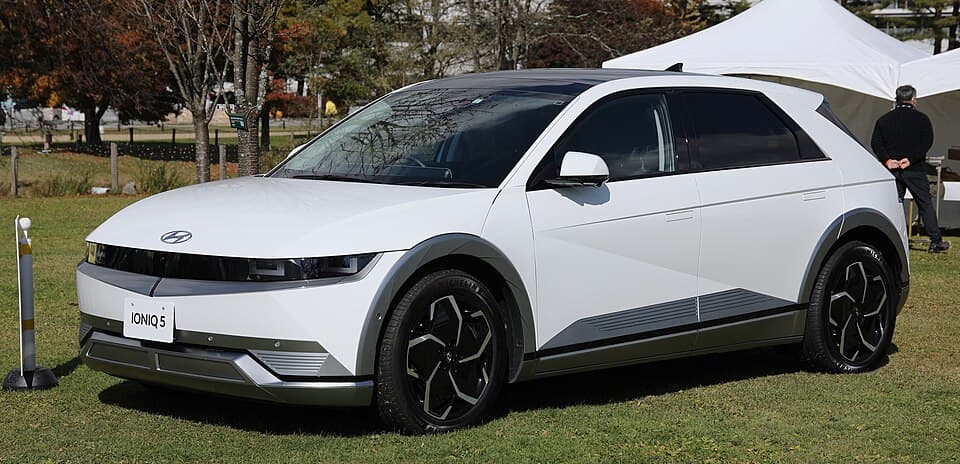 Hyundai IONIQ 5
Models with verified diagnostic coverage
Hyundai Ioniq 5
BEV · 2022–2027
4 verified applicable recordsHyundai Ioniq 6
BEV · 2023–2027
4 verified applicable recordsHyundai Ioniq 9
BEV · 2026–2027
1 verified applicable recordsHyundai Kona
BEV · 2021–2025
77 verified applicable recordsHyundai Santa Fe
PHEV · 2022–2023
19 verified applicable recordsHyundai Tucson
PHEV · 2022–2026
4 verified applicable recordsVerified Manufacturer-level verified records
These records passed the verified evidence gate. Model applicability is shown only where separately supported.
C1000Verified diagnostic recordP1B77For Hyundai, P1B77 is identified in verified evidence as “High Voltage Battery Precharging Fault.” Its meaning and required repair depend on the vehicle and accompanying DTCs. Do not assume that one bulletin applies from P1B77 alone.P1B25Verified diagnostic recordB1621For the applicable 2018–2019 Hyundai Kona and Sonata in the US, DTC B1621 means “ECU Defect/Error.” Hyundai’s referenced service communication directs technicians to replace the wireless charger pad when this code is found.P0630For the listed Hyundai applications, P0630 is associated with the ECM/PCM VIN being not programmed or not matching. Hyundai states that a replacement module must be a new service replacement control module and its VIN must be programmed after installation.C2412Verified diagnostic recordC1112Verified diagnostic recordC1260For Hyundai vehicles covered by the supplied evidence, C1260 is identified as a steering-angle-sensor signal error. The documented procedure is to reset steering-angle-sensor calibration; if the DTC returns, inspect wiring and connector condition.C1259Verified diagnostic recordC1623Verified diagnostic recordC1290Verified diagnostic recordC1704Verified diagnostic recordC1261C1261 is identified in Hyundai manufacturer communications as a zero-setting error. The verified procedure is to erase the DTC, inspect wiring and connector condition, and replace the column and housing assembly if the DTC returns.P0730Verified diagnostic recordP0733Verified diagnostic recordP072900Verified diagnostic recordP073600Verified diagnostic recordP073000P073000 is identified in the supplied Hyundai manufacturer communications as “Gear 8 incorrect ratio.” The verified evidence applies this transmission DTC to certain Hyundai Kona and Sonata vehicles in the supplied applicability data; EV-specific relevance is not established.P0734Verified diagnostic recordP076FVerified diagnostic recordP076F00P076F00 is identified in Hyundai manufacturer communications as “Gear 7 incorrect ratio.” The supplied evidence applies it to certain 2016–2020 Hyundai Kona and Sonata vehicles in the US, but it does not establish EV-specific applicability.P073500P073500 is identified in Hyundai manufacturer communications as “Gear 5 incorrect ratio.” The cited bulletins describe it as an incorrect-ratio DTC associated with transaxle clutch slipping more than 200 rpm while in gear.P073400Verified diagnostic recordP073300P073300 is a Hyundai transaxle diagnostic trouble code for “Gear 3 incorrect ratio.” Hyundai’s referenced service bulletins describe it as an incorrect-ratio condition associated with transaxle clutch slipping more than 200 rpm while in gear.P0736P0736 is identified in the supplied Hyundai manufacturer communications as “Reverse incorrect ratio.” The communications describe it as an incorrect-ratio DTC associated with transaxle clutch slipping more than 200 rpm while in gear.P0735Verified diagnostic recordP0729Verified diagnostic recordP074300For Hyundai Kona vehicles listed below, verified Hyundai/NHTSA service communications include DTC P074300 in an automatic-transaxle solenoid service procedure. The supplied evidence does not establish a plain-language fault definition for P074300.P075300P075300 is identified in verified Hyundai service information as Shift Solenoid A (UD) for the listed automatic-transaxle applications. Hyundai bulletins direct technicians to the applicable TSB or shop manual when this solenoid DTC is present.P074800P074800 is identified in Hyundai official service communications as a Pressure Control (PC) solenoid DTC for certain automatic-transaxle applications.P074100For a 2019–2020 Hyundai Kona in the US, verified evidence links DTC P074100 to Hyundai automatic-transaxle service bulletin procedures. The supplied evidence does not establish a plain-language fault definition, severity, driving safety, charging safety, or a specific failed part.C2703C2703 is documented by Hyundai’s TSB 19-BE-011H-1 in connection with Blind Spot Detection (BSD) or Blind-Spot Collision Warning (BCW) systems. The supplied evidence does not establish the exact fault definition for C2703.C2702C2702 is referenced in Hyundai TSB 19-BE-011H-1 for vehicles equipped with Blind Spot Detection (BSD) or Blind-Spot Collision Warning (BCW). The supplied evidence does not establish a complete diagnostic definition for C2702.P073100P073100 is identified in the verified Hyundai service bulletin as “Gear 1 incorrect ratio.” The bulletin describes this condition as transaxle clutch slipping more than 200 rpm while in gear. The supplied evidence does not establish driveability, charging safety, severity, or a specific repair for your vehicle.P075800Verified diagnostic recordP0748Verified diagnostic recordP0753Verified diagnostic recordP0758Verified diagnostic recordP0731Verified diagnostic recordP073200P073200 is identified by Hyundai TSB 20-AT-001H as “Gear 2 incorrect ratio.” The bulletin describes this group of incorrect-ratio DTCs as transaxle clutch slipping more than 200 rpm while in gear.P0732P0732 is identified in the supplied Hyundai TSB evidence as “Gear 2 incorrect ratio.” The TSB describes it as an incorrect-ratio condition associated with transaxle clutch slipping more than 200 rpm while in gear.C1604Verified diagnostic recordC1616Hyundai DTC C1616 is identified in verified Hyundai service communications as “CAN BUS OFF.” The specified action is to check the chassis CAN line. The full C-MDPS assembly is not to be replaced based on this code alone.C1603For the Hyundai applications supported by the verified TSB evidence, C1603 is an MDPS (motor-driven power steering) thermal-protection code. Hyundai states it protects the motor from overheating; investigate the driving conditions when it set. The cited C-MDPS guidance says no replacement is necessary for C1603.C1688Hyundai DTC C1688 is identified in the supplied manufacturer communications as a VSM signal error in the MDPS (motor-driven power steering) context. The bulletin directs different next steps based on whether MDPS is inoperable or operating normally if the DTC returns.C2401C2401 is identified in Hyundai manufacturer communications as an MDPS motor circuit error. The documented repair flow is to erase the DTC, inspect wiring and connectors between the ECU and motor, replace the C-MDPS ECU (or Power Pack assembly) first, and replace the C-MDPS motor if the DTC returns, where applicable.C1693For the listed Hyundai applications, DTC C1693 is identified in official Hyundai service communications as a VSM signal error. The specified diagnostic direction is to check the VSM and associated wiring, repair as necessary, and erase the DTC(s).C1697Verified diagnostic recordC2400Hyundai DTC C2400 is identified in Hyundai C-MDPS repair-flowchart communications as a motor signal error. The documented procedure says that if C2400 returns, replace the MDPS motor (or Power Pack Assy).C1611For Hyundai C1611, verified Hyundai service-bulletin evidence identifies the fault as an EMS CAN timeout. The listed checks are GDS condition, wiring/connectors, ECU CAN line, C-MDPS ground, and the EMS CAN line.C1622Hyundai DTC C1622 is identified in the supplied official service-bulletin evidence as a vehicle-speed-signal error. The bulletin directs technicians to check the EMS (Engine ECU) and states that the full C-MDPS assembly is not to be replaced for this code.C1705Hyundai DTC C1705 is identified in verified Hyundai service communications as an MDPS ECU hardware error. For the applicable vehicles covered by the communications, the documented process is to erase the DTC, check ECU wiring and connectors, and replace the C-MDPS ECU (or Power Pack assembly) if the DTC returns.C1687Verified diagnostic recordC2413Verified diagnostic recordC1696For verified Hyundai applicability, C1696 is identified as a SPAS signal error. Hyundai’s service communication directs technicians to check the SPAS and associated wiring, repair as necessary, erase DTC(s), and not replace the complete C-MDPS assembly for this code alone.C1700For applicable Hyundai vehicles, C1700 appears in Hyundai MDPS service information. The verified evidence places it in an R-MDPS Power-Pack-related DTC group, for which the published flowchart directs a connector/wiring check, DTC clearing and recheck, then Power Pack assembly replacement if the DTC remains.C1613For the verified 2016–2017 U.S. Hyundai Sonata applicability, C1613 is listed in Hyundai TSB 22-ST-001H as an R-MDPS connector/wiring-related DTC. The bulletin directs checking R-MDPS connectors and wiring, erasing and rechecking DTCs, and replacing the short-gear assembly if the DTC remains present after that process.C1102Verified diagnostic recordC1612Verified diagnostic recordU004688U004688 is listed by Hyundai as an HP EOP-related diagnostic code. The verified instruction is to use the related shop manual for diagnosis; if no wiring-harness issue is found, replace the DCT.P193B79P193B79 is listed by Hyundai/NHTSA material as an HP EOP low hydraulic-pressure DTC. The supplied evidence does not establish severity, whether the vehicle is safe to drive, charging impact, or a specific repair for this code.P1C2E92P1C2E92 is identified in Hyundai bulletin 22-AT-009H as “HP EOP motor control temperature.”U111788U111788 is listed by Hyundai as a High Pressure EOP (HP EOP) diagnostic trouble code. The verified Hyundai service communication directs technicians to the related shop manual and states that, if no wiring-harness issue is found, the DCT should be replaced.P193D13P193D13 is identified in Hyundai service information as “HF EOP System Fault – Open circuit.” Verified applicability is limited to 2022 Hyundai Kona and 2022 Hyundai Santa Fe in the US. The supplied evidence does not establish driveability, charging safety, urgency, symptoms, or a specific repair.P193D19P193D19 is identified in Hyundai service bulletin 22-AT-009H as “HF EOP System Fault - Over current.” The bulletin instructs technicians to inspect the wiring harness and, if no harness issue is found, replace the HF EOP.P1C2D03P1C2D03 is identified in Hyundai bulletin 22-AT-009H as an HP EOP motor position sensor range DTC. The supplied evidence applies it to certain U.S. 2022 Hyundai Kona and Santa Fe vehicles.U113508Verified diagnostic recordP1C2D1CP1C2D1C is listed by Hyundai as “HP EOP motor position sensor voltage.” It is covered in Hyundai communication 22-AT-009H for specified U.S. models. Follow the applicable service manual diagnosis; the bulletin states that if no wiring-harness issue is found, replace the DCT.P193D1DP193D1D is identified in Hyundai service communication 22-AT-009H as “HF EOP System Fault - Current sensor failure.” It is verified as applicable to certain 2022 US Hyundai Santa Fe vehicles. Driveability, charging safety, and urgency are not yet established by verified evidence.P193D4BP193D4B is a Hyundai HF EOP system fault identified as “Over temperature.” Hyundai’s official service communication directs technicians to diagnose the related shop-manual procedure, inspect for wiring-harness issues, and replace the HF EOP if no harness issue is found.P193E71P193E71 is identified in Hyundai bulletin 22-AT-009H as “HF EOP Performance – EOP stuck.” The bulletin directs replacement of the HF EOP when this DTC is found.P193D96P193D96 is identified by Hyundai as an HF EOP System Fault—Internal fault. Hyundai’s bulletin groups it with several HF EOP-related faults and specifies replacement of the HF EOP for the listed DTCs.P193D29P193D29 is identified in Hyundai service information as an HF EOP system fault: Hall sensor failure. The same bulletin also lists CAN-related DTCs that may occur with this condition. Refer to the related shop manual for diagnosis; if no wiring-harness issue is found, the bulletin directs replacement of the DCT.P1C2E4BP1C2E4B is identified in Hyundai service communication 22-AT-009H as “HP EOP motor control current.” The supplied evidence applies to certain U.S. 2022 Hyundai Kona and Santa Fe vehicles, but does not establish exact engine/trim applicability for those two entries.C1313Verified diagnostic recordC1315C1315 is identified in the verified Hyundai/NHTSA bulletin as a right-rear TPMS sensor RF-channel failure. The supplied evidence applies to 2022–2023 Hyundai Santa Fe vehicles in the U.S.; the bulletin specifically concerns Santa Fe Plug-In Hybrid vehicles equipped with Surround View Monitoring (SVM).C1314For 2022–2023 Hyundai Santa Fe vehicles in the US, DTC C1314 is identified as a left-rear TPMS sensor RF-channel failure. Hyundai/NHTSA bulletin 23-BE-001H directs inspection using the TPMS Reception Rate procedure.C1312Verified diagnostic recordDC/DC Converter Input Voltage Sensor FaultVerified diagnostic recordPower is limitedVerified diagnostic recordP1441Verified diagnostic recordP1A77P1A77 means “Check Generator Belt.” For applicable 2023 U.S. Hyundai Tucson Hybrid and Plug-in Hybrid vehicles, Hyundai service communication 23-EE-002H identifies a possible false diagnosis related to synchronization release when the engine stops and provides a software logic improvement.P0846For applicable 2022–2023 Hyundai Kona vehicles in the US, DTC P0846 is referenced in Hyundai TSB 23-AT-010H under pressure-sensor replacement and IVT adaptive-value relearning procedures.P0867For applicable 2022–2023 Hyundai Kona vehicles in the US, DTC P0867 is referenced in Hyundai TSB 23-AT-010H under a pressure-sensor replacement procedure for the IVT. The bulletin calls for entering a pressure-sensor characteristic value with GDS-M and completing TCU adaptive-values learning.P0845For a 2022–2023 Hyundai Kona in the US, DTC P0845 is referenced in Hyundai TSB 23-AT-010H under a pressure-sensor replacement procedure for the IVT. The bulletin directs use of Hyundai GDS-M to enter a pressure-sensor characteristic value and perform TCU adaptive-values learning after the repair.P0722P0722 is identified in the verified Hyundai evidence as “Output speed sensor – No signal.”C2721C2721 is identified as “System Calibration Required LDWS (Lane Departure Warning System).” Verified Hyundai TSB evidence references front-camera target calibration and states that performing this calibration will cause DTC C2721.P2237P2237 is listed by Hyundai as applicable to certain 2024–2025 Kona vehicles in the United States. Verified evidence identifies it in Hyundai TSB 26-FL-003H as an Engine-system DTC addressed by a GDS software update event.P1AA8For certain 2026 Hyundai IONIQ 9 vehicles in the U.S., DTC P1AA8 00 may occur with a MIL warning light and limited charging capability. Hyundai TSB 26-EV-006H provides inspection and, if necessary, Battery System Assembly (BSA) replacement instructions.P0707P0707 is identified in the supplied Hyundai evidence as “Range switch - open circuit.” The verified source also lists Malfunction Indicator Light (MIL) illumination as a symptom.P0706P0706 is identified in the verified Hyundai service communication as “Range switch range/performance.” It is applicable to certain 2016–2019 Hyundai Kona and Sonata vehicles in the US.P0705Verified diagnostic record